
online therapy based in West Seattle & Serving folks throughout Washington & Colorado.
therapy for climate anxiety, political stress, & the polycrisis
(aka the rest of the dumpster fire)

You never thought you’d live in a world where headline after headline leads to rage or tears.
You see the latest headline. You want to cry or scream, but life demands your attention, so you carry on.
But the rage, despair, grief, cynicism, overwhelm, or dread haunt you. Eventually, you may find you’re choosing numbness instead.
You encounter another headline:
Another pollution law overturned. Another person killed via state-sanctioned violence masquerading as “homeland security.” Another attack on voting or civil rights, reinforcing the racism embedded in our systems. More AI-driven layoffs while billionaires keep demanding more efficiency. Another case of men asserting control over women’s bodies.
The feelings return, sometimes even more intensely. Especially if you’re a climate scientist, work in public health, identify as an activist, have survived extreme weather, or are a person with an identity that’s not the privileged one.
Maybe you feel guilt for enjoying a good day.
You may wonder if you’re doing enough or feel complicit in the very systems you oppose. Perhaps you can’t understand how everyone else seems to carry on as though nothing is happening.
Despite your wishes, you can’t simply opt out of the hellscapes that are late-stage capitalism, political chaos, or escalating climate disasters.
Before reading further, take a moment to breathe. (For real. A deep breath with a long exhale.)
This stuff is heavy. It affects everyone differently.
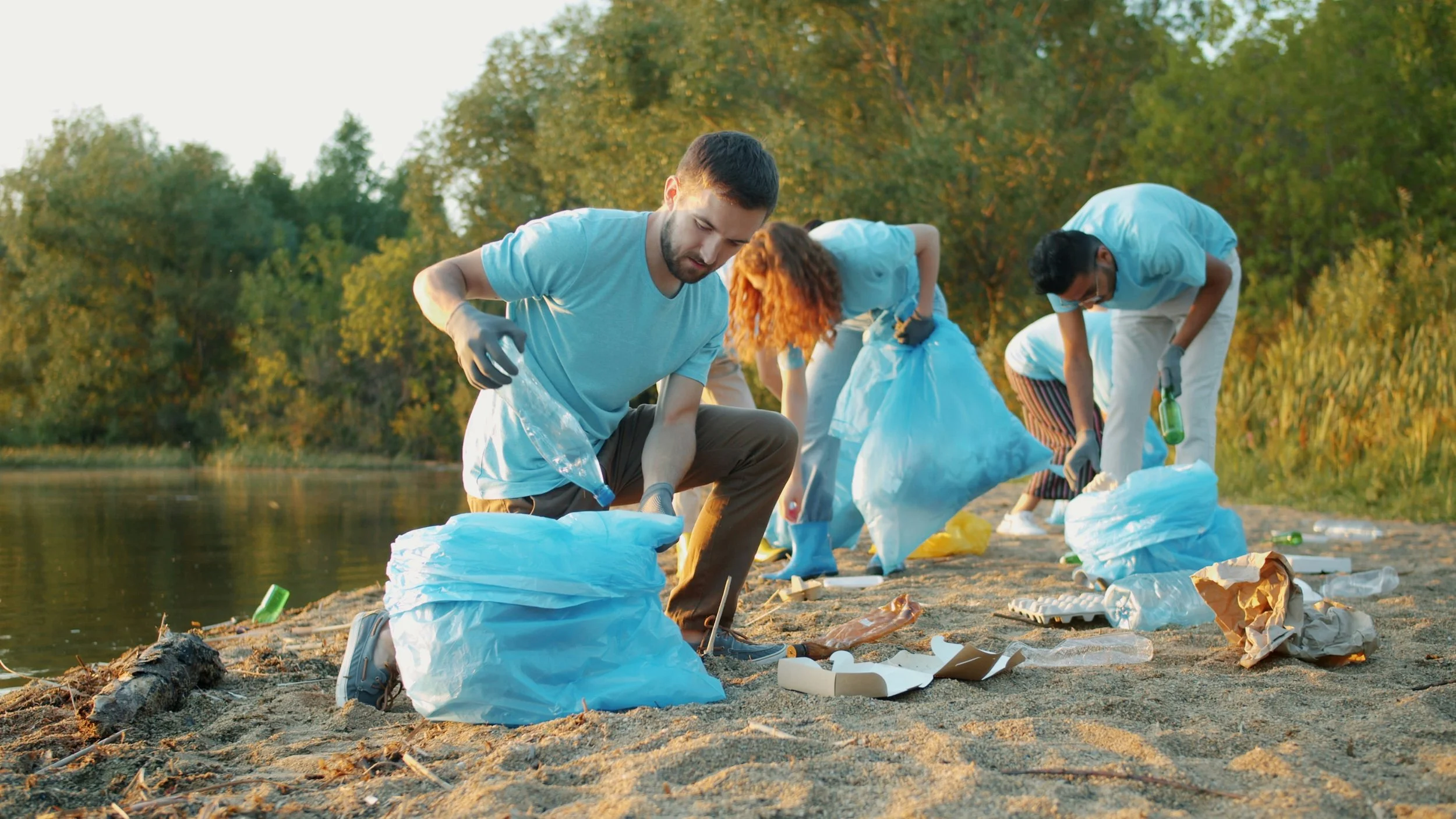
I’m here to support you.
And you can find purpose even while acknowledging the heaviness of the world.
Feel familiar? Maybe you’re…
Feeling isolated and alone, fearing talking about these issues with friends or colleagues because you don’t want to be the Debbie Downer of every group.
No longer talking with family members with whom you used to be close because you can’t fathom how they vote differently.
Unable to concentrate because you’re consumed by what’s happening around you. You’re worried about the world younger and future generations are inheriting.
Debating whether to have a child because you can’t imagine bringing one into this world. It doesn’t necessarily change your desire but creates intense indecision.
Struggling to imagine retirement because you’re worried about where it will be safe to live or having financial security with the cost of everything soaring.
Paralyzed by the dissonance between what you do to earn a living and how your paid labor adds to the crises.
Feeling burned out with your activism, so you’ve stopped participating because you feel overwhelmed and powerless since you’re not seeing any difference as a result of your actions.

Helping you grieve and rage while tending to yourself and community in a world that feels precarious
Therapy can help you know you’re not alone and that what you’re experiencing is a valid and appropriate response to the world around you.
You may discover how to continue consuming news in a sustainable way, so you don’t feel as overwhelmed or get sucked into doomscrolling.
You may choose to contact that family member you gave up on while setting appropriate boundaries.
Or, you may reconnect to ideas, people, and places you’ve unconsciously avoided. Part of this may be helping you find a community that shares your values and with whom you can engage in a form of activism that feels right to you.
In therapy, you’ll have space to grieve because grief is harder to process in isolation. You may discover feeling loss for places or ideals you didn’t realize held so much importance for you.
You’ll have permission (even encouragement) to tune into any rage or anger you may feel, which may be part of grief or may stand alone. Since they’re not considered “productive” by capitalism, such feelings are often minimized. But they communicate important messages, and it’s worth listening to them.
Therapy is also about exploring the other emotions and helping you process them more effectively. Along the way, you’ll learn skills allowing you to disengage from unhelpful thoughts while becoming more attuned and mindful to what’s going on inside and around you.
Our ultimate aim is addressing those big, existential questions, so you can live in a way that brings meaning and hopefully even joy.
What we’ll work on

Therapy for eco-anxiety, political stress, and the rest of the polycrisis can help you…
Understand your relationship with uncertainty, so you feel empowered—rather than alone—knowing you’re one person in this entire mess.
Build psychological flexibility and resilience, so you can continue engaging with the world around us even when it hurts.
Unhook from unhelpful thoughts, so you feel more in control of your responses and actions.
Reconnect with what matters while accepting uncomfortable emotions will nevertheless be present.
Clarify and understand what it means to live your values, even when certain goals may feel pointless.
Identify how to feel at peace with how you’re showing up in this world.
Re-kindle your relationship with nature or activism if they’ve been sidelined.
Find a way to rest without feeling irresponsible or guilty or like you’re ignoring the latest headline.
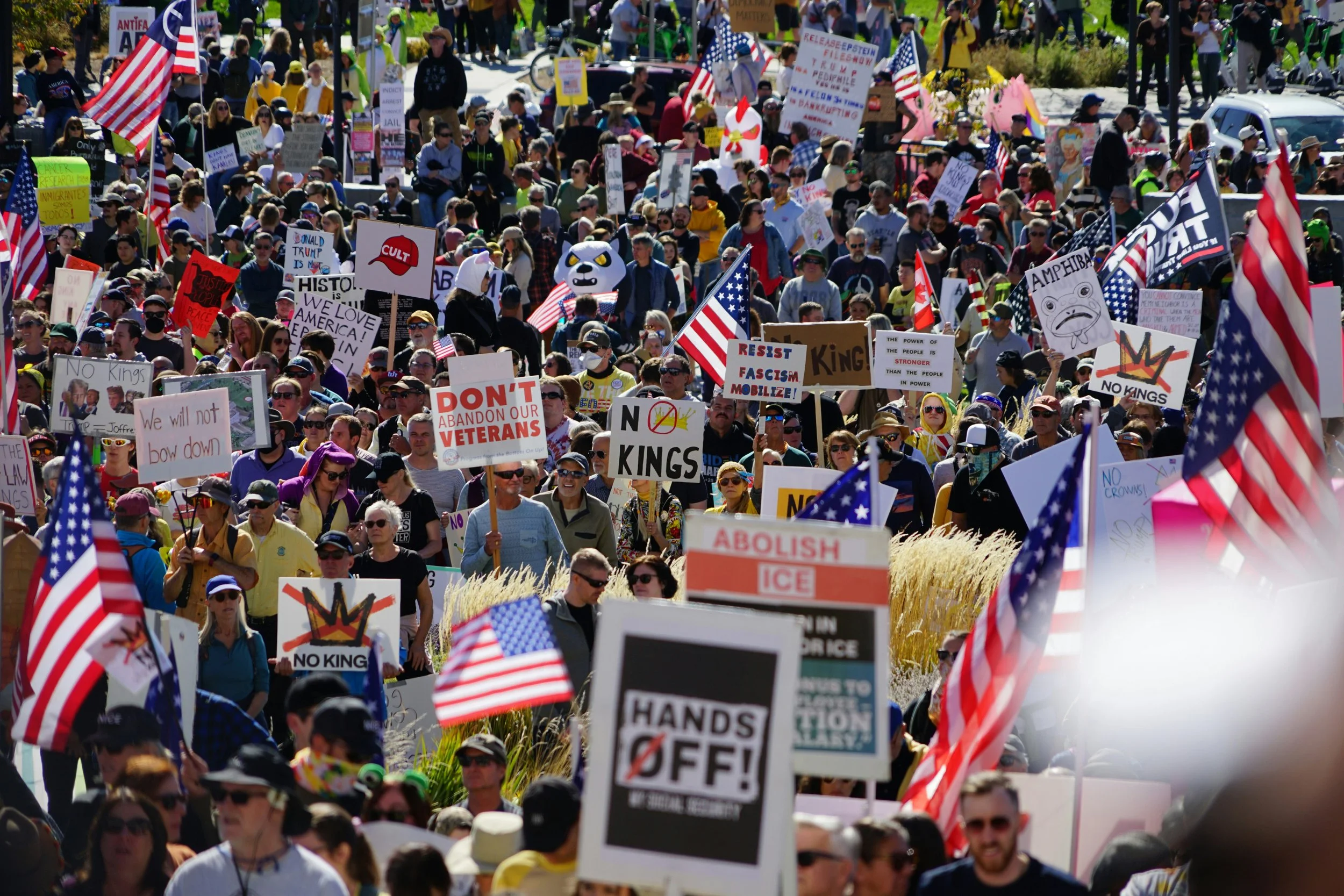
Care what’s happening in the world without letting it consume your entire life.
Questions?
FAQs
-
Polycrisis is a word used to describe multiple crises that occur simultaneously and interact in such a way that compounds or amplifies the impacts of each. The term highlights the interconnection of what’s happening in the world and the feedback loops within the greater systems.
Currently, the term “polycrisis” could refer to, among other crises, climate collapse, economic insecurity, social inequality and on-going systems of oppression, technological changes occurring at a speed faster than humans can understand and regulate them, the rise of authoritarianism and decline of democracy, political polarization, global health pandemics, and geopolitical conflicts.
-
I won’t engage in toxic positivity or false reassurance. I will validate your pain rather than pathologize it or seek to minimize it. Your concern is absolutely real and rational in response to what you’re witnessing around you. In therapy, you may find yourself not necessarily becoming optimistic but redefining hope. Your perspective may shift to allow you to identify where some things are less bad (maybe even good). My goal is never to create optimists but to help people be more present and perceive as clearly as possible despite internalized biases.
-
Absolutely not. I would not suggest ignoring your pain, disconnecting from what’s happening, or caring less are solutions to what you’re feeling, thinking, and experiencing.
During therapy, we may seek to understand your personal limits for interacting with these issues and even grieve that your limits aren’t higher than they are. Each person has an individualized capacity for what they can handle without becoming overwhelmed, and that’s worth investigating and respecting. It’s also not necessarily finite because your capacity can grow or shrink depending on psychological skills or what else is going on in your life at any given time. We may experiment with setting various boundaries, so some amount of your energy goes to learning more about the state of things through news consumption; some amount of energy goes to trying to make change; and some amount is devoted to recharging and rejuvenating yourself, so you can continue caring in a sustainable way and without burning out.
-
Unlike other diagnostic labels, neither climate anxiety nor political stress have a specific set of symptoms that are recognized by the mental health field as a whole, and they’re not defined in the Diagnostic and Statistical Manual of Mental Disorders (DSM—the book that defines mental health diagnoses). There may be a range of potential ways climate anxiety or political stress impact a person, and these may include symptoms consistent with anxiety, depression, or trauma.
To be more specific, you may be feeling panic attacks, ongoing worry or rumination, trouble sleeping, difficulty concentrating, lack of motivation, hopelessness, deep sadness or grief, loss of interest in activities you once enjoyed, or depending on how you’ve been impacted by these issues (like if you experienced a wild fire, natural disaster, or political event like January 6th, 2021), flashbacks and nightmares.
-
Climate anxiety, political stress, and distress related to other catastrophes of this modern age aren’t simply cognitive distortions, and therapy can still help manage what you’re feeling. We’ll work on helping you manage your emotions and concerns effectively and your understanding that the amount of pain you feel is often directly related to the values you hold. We’ll then work on developing ways you can enact your values through your choices, interactions, and activities, which may decrease some of the overwhelm of what you’re feeling.
-
Along with Acceptance and Commitment Therapy (ACT), my practice of therapy is informed by feminist therapy and liberation psychology, along with other frameworks like critical race and decolonial theories. I regularly draw upon these frameworks to highlight systemic oppression and power imbalances, critically examine internalized expectations and norms, emphasize liberation and freedom (rather than accepting restrictive roles while only trying to adapt to them rather than change them), and engage in intersectional and culturally responsive practices.
We live in a highly individualistic culture that often minimizes the impacts of collectivism and systemic issues in the external world. The practice of therapy traditionally prioritizes the individual; it also pathologizes symptoms that are often understandably the result of an experience. While acknowledging the difficulties of truly practicing in a community-oriented and decolonial way (particularly because of norms like insurance and practices like assigning diagnoses), some of this can be avoided by opting out of insurance.
-
I handle differences with respect and in a way that encourages emotional processing, safety, and authenticity. I recognize that many of the issues that come up in this area are nuanced, and few of us have the privilege that can exempt us from having to make hard decisions, especially when our values and the need to feed our family call for different behaviors. I will not turn a therapy session into a political debate or judge you if you work for a company that may be part of larger, systemic problems.
That said, I will challenge someone advocating harm toward a specific group of people based on their identity or any other immutable characteristic, and I likely will encourage openness toward new perspectives if or when prejudice seems to be the basis for a currently held perspective. I believe this to be part of my ethical code as a counselor.